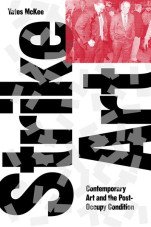


What is the relation of art to the practice of radical politics today? Strike Art explores this question through the historical lens of Occupy, an event that had artists at its core. Precarious, indebted, and radicalized, artists redirected their creativity from servicing the artworld into an expanded field of organizing in order to construct of a new—if internally fraught—political imaginary set off against the common enemy of the 1%. In the process, they called the bluff of a contemporary art system torn between ideals of radical critique, on the one hand, and an increasing proximity to Wall Street on the other—oftentimes directly targeting major art institutions themselves as sites of action.
Autor*innen: Yates McKee
Autor*innen: Barbara Winslow
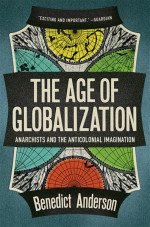
The exchange of ideas makes history as surely as the exchange of gunfire. The Age of Globalization (previously published as Under Three Flags) is an account of the unlikely connections that made up late nineteenth-century politics and culture. In particular, Benedict Anderson examines the links between militant anarchists in Europe and the Americas and the anti-imperialist uprisings in Cuba, China, and Japan.
Autor*innen: Benedict Anderson
Autor*innen: Dario Gentili
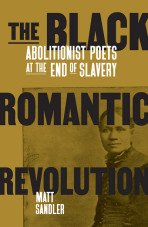
During the pitched battle over slavery in the United States, Black writers - enslaved and free - allied themselves with the cause of abolition and used their art to advocate for emancipation and to envision the end of slavery as a world-historical moment of possibility. These Black writers borrowed from the European tradition of Romanticism - lyric poetry, prophetic visions - to write, speak, and sing their hopes for what freedom might mean. At the same time, they voiced anxieties about the expansion of global capital and US imperial power in the aftermath of slavery. They also focused on the ramifications of slavery's sexual violence
Autor*innen: Matt Sandler
An international best-seller, first published in 1970 when Shulamith Firestone was just twenty-five years old, The Dialectic of Sex broke new ground in presenting a theory of politics for the women’s liberation movement. Firestone posits that feminism is the key radical ideology, the missing link between Marx and Freud, uniting the political with the personal. The book remains of pressing relevance today – a testament to Firestone’s startlingly prescience.
Autor*innen: Shulamith Firestone
Challenging the religious, philosophical and political constraints on personal freedom, Stirner criticizes all doctrines and beliefs that place the interests of God, the state, humanity or society over those of the individual. Anticipating the later work of nihilists, existentialists, and anarchists, The Ego and His Own upholds personal autonomy against all that might oppose it.
Autor*innen: Max Stirner
Autor*innen: Alex S. Vitale
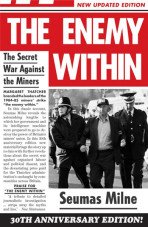
Margaret Thatcher branded the leaders of the 1984–85 miners' strike “the enemy within.” In this classic account, Seumas Milne reveals the astonishing lengths to which her government and its intelligence machine were prepared to go to destroy the power of Britain’s miners’ union.
Autor*innen: Seumas Milne
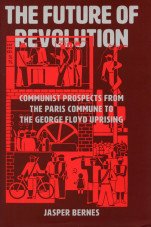
Communism comes from the future, but its hopes haunt our past. Reading revolutionary history from the Paris Commune to the George Floyd Uprising by the light of communist theory, from Marx to C. L. R. James, The Future of Revolution illuminates the possibilities for overcoming class society in the twenty-first century.
Autor*innen: Jasper Bernes
The Great Adaptation tells the story of how scientists, governments and corporations have tried to deal with the challenge that climate change poses to capitalism by promoting adaptation to its consequences, rather than combating its causes. Since the 1970s, neoliberal economists and ideologues have used climate change as an argument for creating more “flexibility” in society, for promoting more market-based solutions to environmental and social questions. This book unveils the political economy of this potent movement, showing how some powerful actors are thriving in the face of dangerous climate change and even making a profit out of it.
Autor*innen: Romain Felli
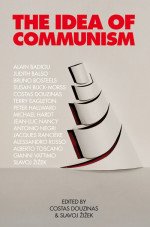
Responding to Alain Badiou’s ‘communist hypothesis’, the leading political philosophers of the Left convened in London in 2009 to take part in a landmark conference to discuss the perpetual, persistent notion that, in a truly emancipated society, all things should be owned in common. This volume brings together their discussions on the philosophical and political import of the communist idea, highlighting both its continuing significance and the need to reconfigure the concept within a world marked by havoc and crisis.
Autor*innen: Costas Douzinas; Slavoj Zizek (Editor)