



Verso books
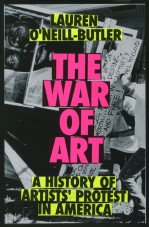
Artists in America have long battled against injustices, believing that art can in fact “do more.” The War of Art tells this history of artist-led activism and the global political and aesthetic debates of the 1960s to the present. In contrast to the financialized art market and celebrity artists, the book explores the power of collective effort - from protesting to philanthropy, and from wheat pasting to planting a field of wheat.
Autor*innen: Lauren O'Neill-Butler

Injustice should not simply be accepted as “the way things are.” This is the starting point for The Xenofeminist Manifesto, a radical attempt to articulate a feminism fit for the twenty-first century. Unafraid of exploring the potentials of technology, both its tyrannical and emancipatory possibilities, the manifesto seeks to uproot forces of repression that have come to seem inevitable - from the family, to the body, to the idea of gender itself.
Autor*innen: Laboria Cuboniks

Mass protest movements in disparate places such as Greece, Argentina, and the United States ultimately share an agenda - to raise the question of what democracy should mean. These horizontalist movements, including Occupy, exercise and claim participatory democracy as the ground of revolutionary social change today.
Autor*innen: Dario Azzellini; Marina Sitrin (Editor)

Autor*innen: Katherine Angel

Under the Banner of King Death is a tale of mutiny, bloody battle, and social revolution, bringing to life an itinerant community of outsiders behind today’s legends. This graphic novel breaks new ground in our understanding of piracy and pirate culture, giving us real reasons to love the rebellious and stouthearted marauders of the seas.
Autor*innen: David Lester, Marcus Rediker
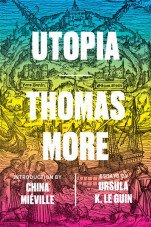
Five hundred years since its first publication, Thomas More’s Utopia remains astonishingly radical and provocative. More imagines an island nation where thousands live in peace and harmony, men and women are both educated, and property is communal. In a text hovering between fantasy, satire, blueprint and game, More explores the theories and realities behind war, political conflicts, social tensions and redistribution, and imagines the day-to-day lives of a citizenry living free from fear, oppression, violence and suffering. But there has always been a shadow at the heart of Utopia. If this is a depiction of the perfect state, why, as well as wonder, does it provoke a growing unease?
Autor*innen: Thomas More

Revolutionary novelist, historian, anarchist, Bolshevik and dissident – Victor Serge is one of the most compelling figures to have emerged from the history of the Soviet Union. A dedicated activist who joined the Bolsheviks in 1919 and fought in the siege of Petrograd, only to be later consigned to poverty and persecution for rejecting both capitalism and Stalinism, he was a keen observer of his times. Carefully wrought and meticulously researched, Susan Weissman’s Victor Serge is the definitive biography of an extraordinary man.
Autor*innen: Susan Weissman

Pirates have long been stock figures in popular culture, from Treasure Island to the more recent antics of Jack Sparrow. Villains of all Nations unearths the thrilling historical truth behind such fictional characters and rediscovers their radical democratic challenge to the established powers of the day.
Autor*innen: Marcus Rediker

It was 1969, and temperatures were rising across the factories of the north as workers demanded better pay and conditions. Soon, discontent would erupt in what became known as Italy’s “Hot Autumn.” A young worker from the impoverished south arrives at Fiat’s Mirafiori factory in Turin, where his darker complexion begins to fade from the fourteen-hour workdays in sweltering industrial heat. He is frequently late for work, and sells his blood when money runs low. He fakes a crushed finger to win sick leave. His bosses try to withhold his wages. Our cynical, dry-witted narrator will not bend to their will. “I want everything, everything that’s owed to me,” he tells them. “Nothing more and nothing less, because you don’t mess with me.”
Autor*innen: Nanni Balestrini

Autor*innen: JoAnn Wypijewski
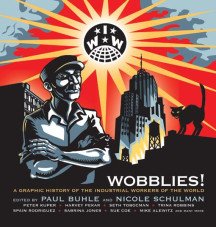
The stories of the hard-rock miners’ shooting wars, young Elizabeth Gurly Flynn (the “Rebel Girl” of contemporary sheet music), the first sit-down strikes and Free Speech fights, Emma Goldman and the struggle for birth control access, the Pageant for Paterson orchestrated in Madison Square Garden, bohemian radicals John Reed and Louise Bryant, field-hand revolts and lumber workers’ strikes, wartime witch hunts, government prosecutions and mob lynching, Mexican-American uprisings in Baja, and Mexican peasant revolts led by Wobblies, hilarious and sentimental songs created and later revived - all are here, and much, much more.
Autor*innen: Paul Buhle; Nicole Schulman (Editor)
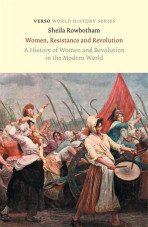
This classic book provides a historical overview of feminist strands among the modern revolutionary movements of Russia, China and the Third World. Sheila Rowbotham shows how women rose against the dual challenges of an unjust state system and social-sexual prejudice. Women, Resistance and Revolution is an invaluable historical study, as well as a trove of anecdote and example fit to inspire today’s generation of feminist thinkers and activists.
Autor*innen: Sheila Rowbotham







 Meine Buchhandlung befindet sich in der Oelweingasse 36/5, 1150 Wien - einen Einblick bietet die Bildergalerie. Hier kannst Du in Ruhe schmökern, ich freue mich auf Deinen Besuch!
 Die Buchhandlung ist jeden Dienstag und Mittwoch von 18:00 - 20:00 Uhr sowie jeden 1. und 3. Samstag im Monat von 12:00 - 16:30 Uhr geöffnet. Alle Artikel aus dem Shop sind vor Ort erhältlich.