
AK Press

Autor*innen: David Berry
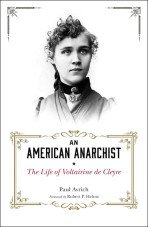
When it was first published, An American Anarchist marked a trail historians of American anarchism are still following today. Narrative-driven like all of Paul Avrich’s works, it presents Voltairine de Cleyre (1866–1912), one of the first prominent American-born anarchists, and her comrades as complex human beings. Part of the free thought movement for many years, it was the Haymarket affair in 1886 that inspired her to adopt anarchism as a political philosophy. De Cleyre explored themes of freedom, unchecked political power, the subjugation of the individual, labor under capitalism, and feminism rooted in a practical anarchism that still speaks to us today. From her numerous writings and speeches, through the illnesses that plagued her, the assassination attempt that left her clinging to life, to her early death at forty-five, she worked tirelessly for her ideal. This edition includes a new foreword by historian Robert P. Helms.
Autor*innen: Paul Avrich
The interviewees represented in this book were active between the 1880s and the 1930s and represent all schools of anarchism. Each of the six thematic sections begins with an explanatory essay, and each interview with a biographical note. Their stories provide a wealth of personal detail about such anarchist luminaries as Emma Goldman and Sacco and Vanzetti. This work of impeccable scholarship is an invaluable resource not only for scholars of anarchism but also for those studying immigration, ethnic politics, education, and labor history.
Autor*innen: Paul Avrich

With a title that's a modern-day mash-up of Frantz Fanon and The Clash, Black Bloc, White Riot revisits the struggles against globalization that marked the beginning of the twenty-first century and explores the connection between political violence and the white middle class.
Autor*innen: AK Thompson (Editor)
On the centenary of the 1917 Russian Revolution, paeans to the conquering Bolsheviks will be sung. But why? Why do so many Marxists and “leftists” still identify with the totalitarian and bureaucratic monster built on the backs and graves of the Russian working class? Could “victory” have been worth the price? The seeds of the Bolshevik dictatorship were sprouting in 1917 and the harvest still haunts us today.
Autor*innen: Friends of Aron Baron (Editor)

Arriving in America in 1904, Carlo Tresca began a nearly forty-year stretch as an active revolutionary. Nunzio Pernicone's definitive biography chronicles Tresca's larger-than-life personality, his revolutionary apprenticeship in Sulmona, Italy, and his subsequent career as fighter for liberty until his untimely death in 1943.
Autor*innen: Nunzio Pernicone

Autor*innen: Alexandre Skirda
Autor*innen: Bernard Goldstein

Autor*innen: Maurice Brinton

From the First International to the 1872 Anti-Authoritarian International, from government suppression and anarchist insurrection to Errico Malatesta's prominent role in resurrecting the anarchist movement, Nunzio Pernicone's Italian Anarchism provides a critical examination of early anarchist practices across three decades of Italian history.
Autor*innen: Nunzio Pernicone

A study of one man and a collective biography of the working class into which he was born. The story of José Peirats shows the human foundations of Spanish anarchism, the ties of friendship and community that cemented the largest anti-authoritarian movement in the world.
Autor*innen: Chris Ealham
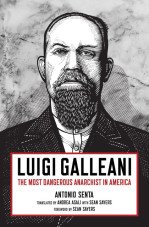
Born in Vercelli in 1861, Luigi Galleani is considered, with Errico Malatesta, the most influential militant of Italian-speaking anarchism. First in Italy and then in the United States, where he arrived at age forty, he was well-known as a tireless thinker, agitator, and public speaker who attracted large numbers of workers to the revolutionary cause and, often, to acts of direct action and “propaganda of the deed.” Though frequently glimpsed in numerous histories of radical movements of the late nineteenth and early twentieth centuries, little has been written about Galleani in English. This book, translated from the Italian, brings the fascinating biography of one of the most charismatic exponents of workers' struggles to a new audience.
Autor*innen: Antonio Senta







 Meine Buchhandlung befindet sich in der Oelweingasse 36/5, 1150 Wien - einen Einblick bietet die Bildergalerie. Hier kannst Du in Ruhe schmökern, ich freue mich auf Deinen Besuch!
 Die Buchhandlung ist jeden Dienstag und Mittwoch von 18:00 - 20:00 Uhr sowie jeden 1. und 3. Samstag im Monat von 12:00 - 16:30 Uhr geöffnet. Alle Artikel aus dem Shop sind vor Ort erhältlich.