

Autor*innen: David Correia; Tyler Wall
Prisoners of the American Dream is Mike Davis’s brilliant exegesis of a persistent and major analytical problem for Marxist historians and political economists: Why has the world’s most industrially advanced nation never spawned a mass party of the working class? This series of essays surveys the history of the American bourgeois democratic revolution from its Jacksonian beginnings to the rise of the New Right and the reelection of Ronald Reagan, concluding with some bracing thoughts on the prospects for progressive politics in the United States.
Autor*innen: Mike Davis
Forty years after the defeat of Nazism, and twenty years after the great wave of decolonization, how is it that racism remains a growing phenomenon? What are the special characteristics of contemporary racism? How can it be related to class divisions and to the contradictions of the nation-state? And how far, in turn, does racism today compel us to rethink the relationship between class struggles and nationalism?
Autor*innen: Etienne Balibar; Immanuel Wallerstein
Autor*innen: Adam Greenfield
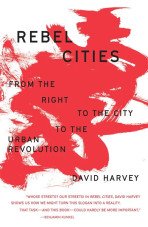
Long before Occupy, cities were the subject of much utopian thinking. They are the centers of capital accumulation as well as of revolutionary politics, where deeper currents of social and political change rise to the surface. Do the financiers and developers control access to urban resources or do the people? Who dictates the quality and organization of daily life?
Autor*innen: David Harvey
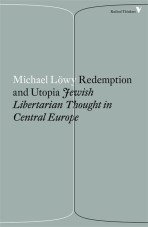
Towards the end of the nineteenth century, there appeared in Central Europe a generation of Jewish intellectuals whose work was to transform modern culture. Drawing at once on the traditions of German Romanticism and Jewish messianism, their thought was organized around the cabalistic idea of the “tikkoun”: redemption. Redemption and Utopia uses the concept of “elective affinity” to explain the surprising community of spirit that existed between redemptive messianic religious thought and the wide variety of radical secular utopian beliefs held by this important group of intellectuals. The author outlines the circumstances that produced this unusual combination of religious and non-religious thought and illuminates the common assumptions that united such seemingly disparate figures as Martin Buber, Franz Kafka, Walter Benjamin and Georg Lukács.
Autor*innen: Michael Löwy
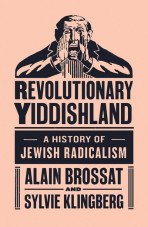
Jewish radicals manned the barricades on the avenues of Petrograd and the alleys of the Warsaw ghetto; they were in the vanguard of those resisting Franco and the Nazis. They originated in Yiddishland, a vast expanse of Eastern Europe that, before the Holocaust, ran from the Baltic Sea to the western edge of Russia and incorporated hundreds of Jewish communities with a combined population of some 11 million people. Within this territory, revolutionaries arose from the Jewish misery of Eastern and Central Europe; they were raised in the fear of God and taught to respect religious tradition, but were caught up in the great current of revolutionary utopian thinking. Socialists, Communists, Bundists, Zionists, Trotskyists, manual workers and intellectuals, they embodied the multifarious activity and radicalism of a Jewish working class that glimpsed the Messiah in the folds of the red flag.
Autor*innen: Alain Brossat; Sylvia Klingberg
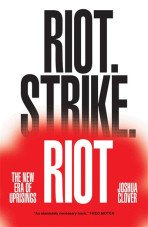
Baltimore. Ferguson. Tottenham. Clichy-sous-Bois. Oakland. Ours has become an “age of riots” as the struggle of people versus state and capital has taken to the streets. Award-winning poet and scholar Joshua Clover offers a new understanding of this present moment and its history. Rioting was the central form of protest in the seventeenth and eighteenth centuries, yet it was supplanted by age of the glorious strike and labour protests of the nineteenth and twentieth centuries. From, from the seventies on, we're seen a return of the strike - now changed along with the coordinates of race and class.
Autor*innen: Joshua Clover
How did America recover after its years of civil war? How did freed men and women, former slaves, respond to their newly won freedom? David Roediger’s radical new history redefines the idea of freedom after the jubilee, using fresh sources and texts to build on the leading historical accounts of Emancipation and Reconstruction. Reinstating ex-slaves’ own “freedom dreams” in constructing these histories, Roediger creates a masterful account of the emancipation and its ramifications on a whole host of day-to-day concerns for Whites and Blacks alike, such as property relations, gender roles, and labor.
Autor*innen: David Roediger
Autor*innen: Mike Davis; Jon Wiener
Autor*innen: Nicos Poulantzas
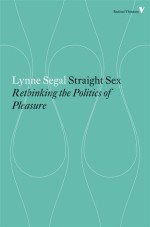
Is heterosexual sex inherently damaging to women? This is the central question of Straight Sex, Lynne Segal’s account of twentyfive years of feminist thinking on sexuality. Covering the thought of sixties-era sexual liberationists, alongside the ensuing passionate debates over sex and love within feminist and lesbian communities, Segal covers certain shifts toward greater sexual conservatism in the eighties. Straight Sex examines an array of issues, including sex as a subversive activity, the “liberated orgasm,” sex advice literature, gender uncertainties, queer politics, anti-pornography campaigns and the rise of the moral right.
Autor*innen: Lynne Segal