




- Details
- Kund*innen-Tipp
Produktbeschreibung
Race, Nation, Class: Ambiguous Identities
Forty years after the defeat of Nazism, and twenty years after the great wave of decolonization, how is it that racism remains a growing phenomenon? What are the special characteristics of contemporary racism? How can it be related to class divisions and to the contradictions of the nation-state? And how far, in turn, does racism today compel us to rethink the relationship between class struggles and nationalism?
This book attempts to answer these fundamental questions through a remarkable dialogue between the French philosopher Etienne Balibar and the American historian and sociologist Immanuel Wallerstein. Each brings to the debate the fruits of over two decades of analytical work, greatly inspired, respectively, by Louis Althusser and Fernand Braudel. Both authors challenge the commonly held notion of racism as a continuation of, or throwback to, the xenophobias of past societies and communities. They analyze it instead as a social relation indissolubly tied to present social structures—the nation-state, the division of labor, and the division between core and periphery—which are themselves constantly being reconstructed. Despite their productive disagreements, Balibar and Wallerstein both emphasize the modernity of racism and the need to understand its relation to contemporary capitalism and class struggle. Above all, their dialogue reveals the forms of present and future social conflict, in a world where the crisis of the nation-state is accompanied by an alarming rise of nationalism and chauvinism.
Book, 310 pages
Kund*innen, die diesen Artikel kauften, haben auch folgende Artikel bestellt:

Als letzte Bastion kämpfen im Norden Syriens kurdische KämpferInnen gegen die jihadistische Bedrohung durch den selbsternannten »Islamischen Staat«. Nach jahrzehntelanger Unterdrückung durch das Baath-Regime gelang es den syrischen KurdInnen im Windschatten des Aufstands gegen das Regime 2012, den Großteil ihrer Siedlungsgebiete zu übernehmen. Mit der Entwicklung des Aufstands zum Bürgerkrieg und dem wachsenden Einfluss jihadistischer Gruppen ist jedoch die Sicherheitslage in Rojava (»West-Kurdistan«), wie Syrisch-Kurdistan von den KurdInnen selbst genannt wird, zunehmend prekär geworden. Für die syrischen KurdInnen ist die Verteidigung ihrer Städte und Dörfer ein Überlebenskampf geworden.

Die Geschichte des jüdischen Proletariers, Anarchisten und Revolutionärs Leo Rothziegel. 27 Jahre war er bei seinem Tode alt, gelernter Buchdrucker, Autodidakt, gebildet, glänzender Redner und ein Feuerkopf wie sein Ideal: Bakunin.



Der Mensch ist vor allem ein soziales Wesen, und der Gesellschaftstrieb bildet eine der wichtigsten Voraussetzungen seines persönlichen Bewusstseins. Die äußere Umgebung, die Beziehungen zu den Mitmenschen, die Erziehung, der geistige Niederschlag besonderer Ideenrichtungen, überlieferte Vorurteile religiöser, politischer oder allgemeiner Natur und manches andere wirken fortgesetzt auf unser persönliches Handeln und drücken unserem Wesen ihren Stempel auf.







 Meine Buchhandlung befindet sich in der Oelweingasse 36/5, 1150 Wien - einen Einblick bietet die Bildergalerie. Hier kannst Du in Ruhe schmökern, ich freue mich auf Deinen Besuch!
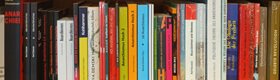 Die Buchhandlung ist jeden Dienstag und Mittwoch von 18:00 - 20:00 Uhr sowie jeden 1. und 3. Samstag im Monat von 12:00 - 16:30 Uhr geöffnet. Alle Artikel aus dem Shop sind vor Ort erhältlich.