




Verso books

This volume brings together papers from the subsequent 2011 New York conference organized by Verso and continues this critical discussion, highlighting the philosophical and political importance of the communist idea, in a world of financial and social turmoil.
Contributors include Alain Badiou, Etienne Balibar, Bruno Bosteels, Susan Buck-Morss, Jodi Dean, Adrian Johnston, François Nicolas, Frank Ruda, Emmanuel Terray and Slavoj Žižek.
Autor*innen: Slavoj Zizek (Editor)

Autor*innen: Carola Dietze

Autor*innen: Theodore W. Allen

With a foreword by the best-selling author of The Dispossessed, Ursula K. Le Guin, The Next Revolution brings together Bookchin’s essays on freedom and direct democracy for the first time, offering a bold political vision that can move us from protest to social transformation. A pioneering voice in the ecology and anarchist movements, he is the author of The Ecology of Freedom and Post-Scarcity Anarchism among many other books.
Autor*innen: Murray Bookchin
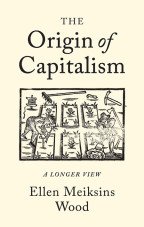
In The Origin of Capitalism, a now-classic work of history, Ellen Meiksins Wood offers readers a clear and accessible introduction to the theories and debates concerning the birth of capitalism, imperialism, and the modern nation state. Capitalism is not a natural and inevitable consequence of human nature, nor simply an extension of age-old practices of trade and commerce. Rather, it is a late and localized product of very specific historical conditions, which required great transformations in social relations and in the relationship between humans and nature.
Autor*innen: Ellen Meiksins Wood

In the uprisings of the Arab world, Alain Badiou discerns echoes of the European revolutions of 1848. In both cases, the object was to overthrow despotic regimes maintained by the great powers-regimes designed to impose the will of financial oligarchies.
Autor*innen: Alain Badiou

Autor*innen: Gavin Walker (Editor)

For a brief explosive period in the mid-1970s, the young and the unemployed of Italy’s cities joined the workers in an unexpectedly militant movement known simply as Autonomy (Autonomia). Its “politics of refusal” united its opponents behind draconian measures more severe than any seen since the war.
Autor*innen: Nanni Balestrini

Autor*innen: Bill V. Mullen; Christopher Vials

Throughout the ages and across every continent, people have struggled against those in power and raised their voices in protest-rallying others around them or, sometimes, inspiring uprisings many years later. Their echoes reverberate from Ancient Greece, China and Egypt, via the dissident poets and philosophers of Islam and Judaism, through to the Arab slave revolts and anti-Ottoman rebellions of the Middle Ages. These sources were tapped during the Dutch and English revolutions at the outset of the Modern world, and in turn flowed into the French, Haitian, American, Russian and Chinese revolutions. More recently, resistance to war and economic oppression has flared up on battlefields and in public spaces from Beijing and Cairo to Moscow and New York City.
Autor*innen: Audrea Lim; Andrew Hsiao (Editor)
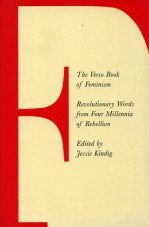
Throughout written history and across the world, women have protested the restrictions of gender and the limitations placed on women’s bodies and women’s lives. People - of any and no gender - have protested and theorized, penned manifestos and written poetry and songs, testified and lobbied, gone on strike and fomented revolution, quietly demanded that there is an “I” and loudly proclaimed that there is a “we.” The Book of Feminism chronicles this history of defiance and tracks it around the world as it develops into a multivocal and unabashed force.
Autor*innen: Jessie Kindig (Editor)

One hundred kilometres from Seville lies the small village of Marinaleda, which for the last thirty-five years has been the centre of a tireless struggle to create a living utopia. This unique community drew British author Dan Hancox to Spain, and here for the first time he recounts the fascinating story of villagers who expropriated the land owned by wealthy aristocrats and have, since the 1980s, made it the foundation of a cooperative way of life.
Autor*innen: Dan Hancox







 Meine Buchhandlung befindet sich in der Oelweingasse 36/5, 1150 Wien - einen Einblick bietet die Bildergalerie. Hier kannst Du in Ruhe schmökern, ich freue mich auf Deinen Besuch!
 Die Buchhandlung ist jeden Dienstag und Mittwoch von 18:00 - 20:00 Uhr sowie jeden 1. und 3. Samstag im Monat von 12:00 - 16:30 Uhr geöffnet. Alle Artikel aus dem Shop sind vor Ort erhältlich.