




English books
Englischsprachige Bücher von AK Press, Crimethinc und anderen...

Autor*innen: David Berry

Yet, for nearly 2000 years, the city has been a breeding ground for radical ideas, home to thinkers, heretics and rebels from John Wycliffe to Karl Marx. It has been the site of sometimes violent clashes that changed the course of history: the Levellers’ doomed struggle for liberty in the aftermath of the Civil War; the silk weavers, match girls and dockers who crusaded for workers’ rights; and the Battle of Cable Street, where East Enders took on Oswald Mosley’s Black Shirts.
Autor*innen: John Rees; Lindsey German
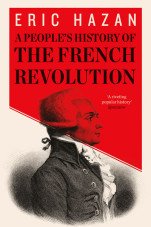
Looking at history from the bottom up, providing an account of working people and peasants, Hazan asks, how did they see their opportunities? What were they fighting for? What was the Terror and could it be justified? And how was the revolution stopped in its tracks? The People’s History of the French Revolution is a vivid retelling of events, bringing them to life with a multitude of voices. Only in this way, by understanding the desires and demands of the lower classes, can the revolutionary bloodshed and the implacable will of a man such as Robespierre be truly understood.
Autor*innen: Eric Hazan

Anarchism is a gathering wilderness that continually defies the confusions and contradictions of capitalism and its current incarnation as neoliberalism. Rooting itself in the tiny forgotten cracks of our fractured order, anarchism heaves open spaces of resistance and rebellion with the energy of a thousand suns. It is the strength that comes when we recognise the beauty of our own lives by seeing ourselves reflected in the lives of others. A dagger in the heart of domination, a clarion call for mutual aid, an unyielding spirit of revolt, anarchism allows us to acknowledge our connection to the Earth, to each other and to the entirety of existence. More than mere ideology, anarchism is a way of knowing and being in a world that situates humanity as but a single flowering within the great mystery of consciousness. Anarchism above all else, as this primer makes clear, is a geography of possibilities.
Autor*innen: Simon Springer
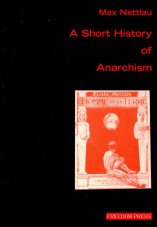
Max Nettlau was the most proficient, and still is the most important, chronicler of anarchism. This single volume (at 400 pages) introduction to the history of anarchist ideas and early movements, summarizing the author's monumental 9-volume history and several biographies, is the most reliable guide. The 18 chapters cover the precursors of anarchism, the history of ideas like individualist anarchism, Proudhonism and revolutionary syndicalism, and the history of the world anarchist movement up to 1930.
Autor*innen: Max Nettlau

Tens of millions of people poured onto the streets for Black Lives Matter, bringing with them a wholly new idea of public safety, common security, and the delivery of justice, communicating that vision in the fiery vernacular of riot, rebellion, and protest. A World without Police transcribes these new ideas - written in slogans and chants, over occupied bridges and hastily assembled barricades - into a compelling, must-read manifesto for police. A World without Police argues that abolition is not a distant dream or an unreachable horizon but an attainable reality. In communities around the world, we are beginning to glimpse a real, lasting justice in which we keep us safe.
Autor*innen: Geo Maher

No other country and no other period has produced a tradition of major aesthetic debate to compare with that which unfolded in German culture from the 1930s to the 1950s. In Aesthetics and Politics the key texts of the great Marxist controversies over literature and art during these years are assembled in a single volume. They do not form a disparate collection but a continuous, interlinked debate between thinkers who have become giants of twentieth-century intellectual history.
Autor*innen: Theodor Adorno; Walter Benjamin; Ernst Bloch; Bertolt Brecht; Georg Lukács
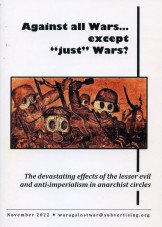
The devastating effects of the lesser evil and anti-imperialims in anarchist circles
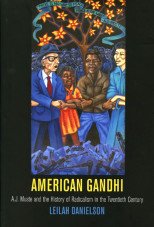
When Abraham Johannes Muste died in 1967, newspapers throughout the world referred to him as the "American Gandhi." Best known for his role in the labor movement of the 1930s and his leadership of the peace movement in the postwar era, Muste was one of the most charismatic figures of the American left in his time. Had he written the story of his life, it would also have been the story of social and political struggles in the United States during the twentieth century.
Autor*innen: Leilah Danielson
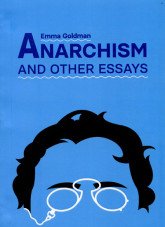
Lithuanian born anarchist Emma Goldman emmigrated to the United States at the age of sixteen. She first became attracted to anarchism following the Haymarket affair of 1886, a massacre in which seven police officers and an unknown number of civilians were killed during a march of striking Chicago workers. Eight anarchists were subsequently tried for murder. "Anarchism and Other Essays" is a collection of essays first published in 1911.
Autor*innen: Emma Goldman
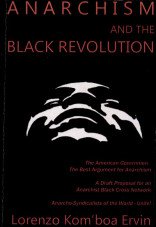
Anarchist theory has long suffered from a whiteness problem. This book places its critique of both capitalism and racism firmly at the centre of the text. Making a powerful case for the building of a Black revolutionary movement that rejects sexism, homophobia, militarism and racism, Lorenzo Kom'boa Ervin counters the lies and distortions about anarchism spread by its left- and right-wing opponents alike.
Autor*innen: Lorenzo Kom´boa Ervin

Providing a complete picture of Victor Serge s relationship to anarchist action and doctrine, this volume contains writings going back to his teenage years in Brussels, where he became influenced by the doctrine of individualist anarchism. At the heart of the anthology are key articles written soon after his arrival in Paris in 1909, when he became editor of the newspaper "l'anarchie." In these articles Serge develops and debates his own radical thoughts, arguing the futility of mass action and embracing illegalism. Serge s involvement with the notorious French group of anarchist armed robbers, the Bonnot Gang, landed Serge in prison for the first time in 1912. The book includes both his prison correspondence with his anarchist comrade Emile Armand and articles written immediately after his release. The book also includes several articles and letters written by Serge after he had left anarchism behind and joined the Russian Bolsheviks in 1919.
Autor*innen: Victor Serge







 Meine Buchhandlung befindet sich in der Oelweingasse 36/5, 1150 Wien - einen Einblick bietet die Bildergalerie. Hier kannst Du in Ruhe schmökern, ich freue mich auf Deinen Besuch!
 Die Buchhandlung ist jeden Dienstag und Mittwoch von 18:00 - 20:00 Uhr sowie jeden 1. und 3. Samstag im Monat von 12:00 - 16:30 Uhr geöffnet. Alle Artikel aus dem Shop sind vor Ort erhältlich.