
Geschichte
Was wir aus der Geschichte lernen können: Nicht die Anbetung der Asche, sondern das Weitertragen des Feuers...
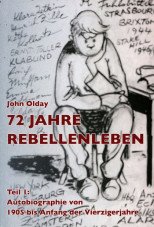
In dieser Autobiographie beschreibt John Olday (1905-1977) die wirkliche Geschichte der ersten Hälfte seines ereignisreichen Lebens. Kriegsarmut, Diebereien, Revolten und Plünderungen. Spartakus, Bandenkampf und Hamburger Aufstand. Schwulenszene, Drogen und Vagabondage. Eine „kleine unorganisierte Gemeinschaft“ im Untergrund gegen den Nationalsozialismus. Exil in London…Was hatte Hilda Monte eigentlich mit Georg Elser zu tun? Olday gewährt Einblick in die revolutionären und anarchistischen, aber auch kriminellen und subkulturellen Zusammenhänge, in die er verwickelt war.
Autor*innen: John Olday

Autor*innen: David Berry
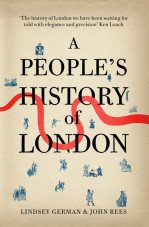
Yet, for nearly 2000 years, the city has been a breeding ground for radical ideas, home to thinkers, heretics and rebels from John Wycliffe to Karl Marx. It has been the site of sometimes violent clashes that changed the course of history: the Levellers’ doomed struggle for liberty in the aftermath of the Civil War; the silk weavers, match girls and dockers who crusaded for workers’ rights; and the Battle of Cable Street, where East Enders took on Oswald Mosley’s Black Shirts.
Autor*innen: John Rees; Lindsey German
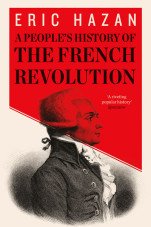
Looking at history from the bottom up, providing an account of working people and peasants, Hazan asks, how did they see their opportunities? What were they fighting for? What was the Terror and could it be justified? And how was the revolution stopped in its tracks? The People’s History of the French Revolution is a vivid retelling of events, bringing them to life with a multitude of voices. Only in this way, by understanding the desires and demands of the lower classes, can the revolutionary bloodshed and the implacable will of a man such as Robespierre be truly understood.
Autor*innen: Eric Hazan
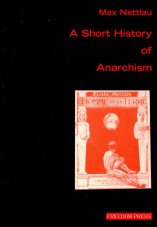
Max Nettlau was the most proficient, and still is the most important, chronicler of anarchism. This single volume (at 400 pages) introduction to the history of anarchist ideas and early movements, summarizing the author's monumental 9-volume history and several biographies, is the most reliable guide. The 18 chapters cover the precursors of anarchism, the history of ideas like individualist anarchism, Proudhonism and revolutionary syndicalism, and the history of the world anarchist movement up to 1930.
Autor*innen: Max Nettlau
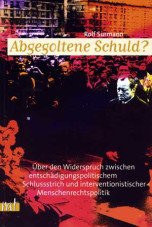
Autor*innen: Rolf Surman
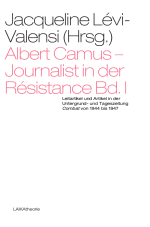
Camus’ Gedanken, seine Wachsamkeit und die Weigerung, komplexe Probleme mit einfachen Antworten zu befrieden, können auch unser heutiges Nachdenken über politische Konflikte und verantwortungsvolles Handeln erhellen. Band I enthält alle Artikel und Leitartikel Camus’ bis zum Ende des Jahres 1944.
Autor*innen: Jacqueline Lévi-Valensi (Hg.)
Camus’ Gedanken, seine Wachsamkeit und die Weigerung, komplexe Probleme mit einfachen Antworten zu befrieden, können auch unser heutiges Nachdenken über politische Konflikte und verantwortungsvolles Handeln erhellen. Band II enthält jene der Jahre 1945 bis 1947 sowie einzelne Veröffentlichungen Camus’ aus den Jahren 1948 und 1949.
Autor*innen: Jacqueline Lévi-Valensi (Hg.)
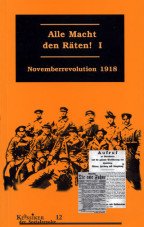
Autor*innen: Teo Panther (Hg.)
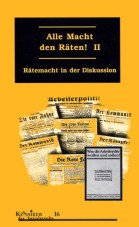
Autor*innen: Teo Panther (Hg.)
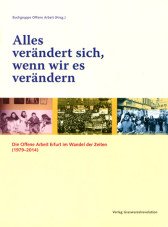
Die Offene Arbeit Erfurt ist eine der Gruppen, in denen sich in der DDR Menschen zusammengeschlossen haben, die mit viel persönlichem Einsatz gegen die Herrschaft der SED eingetreten sind. Allerdings mussten sie feststellen, dass viele der im Umbruch angestoßenen gesellschaftlichen Veränderungsprozesse im Oktober 1990 ihr vorläufiges Ende fanden. Was bedeutet Offene Arbeit im Wandel der Zeiten? Was ist von den Zielen und Ideen der Friedens- und Umweltgruppen in der DDR geblieben? Welche Wege sind unter den veränderten gesellschaftlichen Rahmenbedingungen zu gehen, um diese Ziele und Ideen weiterzuverfolgen?
Autor*innen: Buchgruppe Offene Arbeit (Hg.)
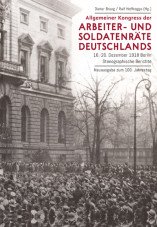
Vom 16. bis 20. Dezember 1918 trafen sich im Berliner Abgeordnetenhaus Delegierte aller deutschen Arbeiter- und Soldatenräte erstmals zu einem Kongress. Nach dem Sturz des Kaisertums am 9. November 1918 lag die Zukunft der deutschen Republik in den Händen dieses „Reichsrätekongresses”. Ob Rätesystem oder Nationalversammlung, baldige Wahlen oder Konsolidierung der Revolution, Volksheer oder Reichswehr, Sozialisierung oder Marktwirtschaft: die Entscheidungen der Delegierten konnten kaum weitreichender sein. Sie lösten große Erwartungen und heftige Verbitterung aus. Es ging um Sein oder Nichtsein der „Sozialistischen Republik Deutschlands”.
Autor*innen: Dieter Braeg; Ralf Hoffrogge (Hg.)







 Meine Buchhandlung befindet sich in der Oelweingasse 36/5, 1150 Wien - einen Einblick bietet die Bildergalerie. Hier kannst Du in Ruhe schmökern, ich freue mich auf Deinen Besuch!
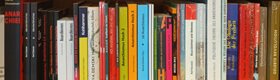 Die Buchhandlung ist jeden Dienstag und Mittwoch von 18:00 - 20:00 Uhr sowie jeden 1. und 3. Samstag im Monat von 12:00 - 16:30 Uhr geöffnet. Alle Artikel aus dem Shop sind vor Ort erhältlich.