
English books
Englischsprachige Bücher von AK Press, Crimethinc und anderen...
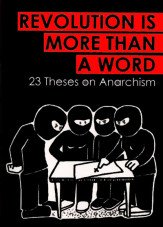
In short, despite the mentioned upswing, anarchism appears as marginalized as ever when it comes to the grand scale of things. In light of this, it seems as good a time as any to reflect on anarchism’s role in the overall political arena and to examine its strengths and weaknesses.
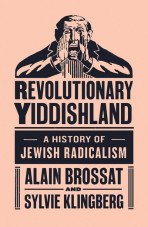
Jewish radicals manned the barricades on the avenues of Petrograd and the alleys of the Warsaw ghetto; they were in the vanguard of those resisting Franco and the Nazis. They originated in Yiddishland, a vast expanse of Eastern Europe that, before the Holocaust, ran from the Baltic Sea to the western edge of Russia and incorporated hundreds of Jewish communities with a combined population of some 11 million people. Within this territory, revolutionaries arose from the Jewish misery of Eastern and Central Europe; they were raised in the fear of God and taught to respect religious tradition, but were caught up in the great current of revolutionary utopian thinking. Socialists, Communists, Bundists, Zionists, Trotskyists, manual workers and intellectuals, they embodied the multifarious activity and radicalism of a Jewish working class that glimpsed the Messiah in the folds of the red flag.
Autor*innen: Alain Brossat; Sylvia Klingberg
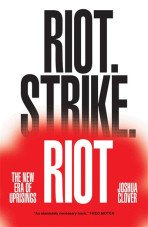
Baltimore. Ferguson. Tottenham. Clichy-sous-Bois. Oakland. Ours has become an “age of riots” as the struggle of people versus state and capital has taken to the streets. Award-winning poet and scholar Joshua Clover offers a new understanding of this present moment and its history. Rioting was the central form of protest in the seventeenth and eighteenth centuries, yet it was supplanted by age of the glorious strike and labour protests of the nineteenth and twentieth centuries. From, from the seventies on, we're seen a return of the strike - now changed along with the coordinates of race and class.
Autor*innen: Joshua Clover

How did America recover after its years of civil war? How did freed men and women, former slaves, respond to their newly won freedom? David Roediger’s radical new history redefines the idea of freedom after the jubilee, using fresh sources and texts to build on the leading historical accounts of Emancipation and Reconstruction. Reinstating ex-slaves’ own “freedom dreams” in constructing these histories, Roediger creates a masterful account of the emancipation and its ramifications on a whole host of day-to-day concerns for Whites and Blacks alike, such as property relations, gender roles, and labor.
Autor*innen: David Roediger

Autor*innen: Mike Davis; Jon Wiener

Autor*innen: Amnesty International UK
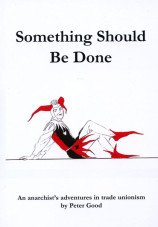
This is the true story of an anarchist’s honest attempt to work within the NHS and its Trade Unions, with the aim of improving the conditions for both workes and patients. Peter Good is the force of nature behind The Cunnigham Amendment journal.
Autor*innen: Peter Good

Cast off the chains of corporate food dependency! Twenty-five years after the publication of the original Soy Not Oi, the Hippycore Krew returns with a second volume featuring a worldwide cast of contributors! The new Soy Not Oi is filled with over 200 original vegan recipes, and suggested musical accompaniments.
Autor*innen: Hippycore Crew
Autor*innen: Nicos Poulantzas
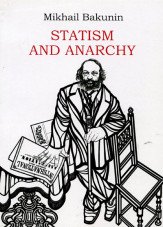
Statism and Anarchy is a translation of the last work by the great Russian anarchist Michael Bakunin. It was written in 1873, in the aftermath of the rise of the German Empire and the clash between Bakunin and Karl Marx in the first International. Bakunin assesses the strength of a European state system dominated by Bismarck. Then, in the most remarkable part of the book, he assails the Marxist alternative, predicting that a "dictatorship of the proletariat" will in fact be a dictatorship over the proletariat, and will produce a new class of socialist rulers. Instead, he outlines his vision of an anarchist society and identifies the social forces he believes will achieve an ananarchist revolution.
Autor*innen: Mikhail Bakunin
Is heterosexual sex inherently damaging to women? This is the central question of Straight Sex, Lynne Segal’s account of twentyfive years of feminist thinking on sexuality. Covering the thought of sixties-era sexual liberationists, alongside the ensuing passionate debates over sex and love within feminist and lesbian communities, Segal covers certain shifts toward greater sexual conservatism in the eighties. Straight Sex examines an array of issues, including sex as a subversive activity, the “liberated orgasm,” sex advice literature, gender uncertainties, queer politics, anti-pornography campaigns and the rise of the moral right.
Autor*innen: Lynne Segal







 Meine Buchhandlung befindet sich in der Oelweingasse 36/5, 1150 Wien - einen Einblick bietet die Bildergalerie. Hier kannst Du in Ruhe schmökern, ich freue mich auf Deinen Besuch!
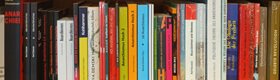 Die Buchhandlung ist jeden Dienstag und Mittwoch von 18:00 - 20:00 Uhr sowie jeden 1. und 3. Samstag im Monat von 12:00 - 16:30 Uhr geöffnet. Alle Artikel aus dem Shop sind vor Ort erhältlich.