



Bücher und Broschüren
Meine umfangreiche Auswahl von Büchern und Broschüren zu den verschiedensten Themenbereichen - Gesamtübersicht.
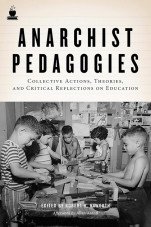
Education is a challenging subject for anarchists. Many are critical about working within a state-run education system that is embedded in hierarchical, standardized, and authoritarian structures. Numerous individuals and collectives envision the creation of counterpublics or alternative educational sites as possible forms of resistance, while other anarchists see themselves as “saboteurs” within the public Arena - believing that there is a need to contest dominant forms of power and educational practices from multiple fronts. Of course, if anarchists agree that there are no blueprints for education, the question remains, in what dynamic and creative ways can we construct nonhierarchical, anti-authoritarian, mutual, and voluntary educational spaces?
Autor*innen: Robert H. Haworth (Editor)

Wildcat Anarchist Comics collects the drawings of Donald Rooum, mostly (but by no means entirely) from the long-running “Wildcat” cartoon series that has been published in Freedom newspaper since 1980. Rooum does not just purvey jokes but makes the drawings comical in themselves, “getting the humour in the line,” provoking laughter even in those who do not read the captions or speech balloons.
Autor*innen: Donald Rooum

The history of anarchist-Marxist relations is usually told as a history of factionalism and division. These essays, based on original research and written especially for this collection, reveal some of the enduring sores in the revolutionary socialist movement in order to explore the important, too often neglected left-libertarian currents that have thrived in revolutionary socialist movements. By turns, the collection interrogates the theoretical boundaries between Marxism and anarchism and the process of their formation, the overlaps and creative tensions that shaped left-libertarian theory and practice, and the stumbling blocks to movement cooperation. Bringing together specialists working from a range of political perspectives, the book charts a history of radical twentieth-century socialism, and opens new vistas for research in the twenty-first. Contributors examine the political and social thought of a number of leading socialist - Marx, Morris, Sorel, Gramsci, Guérin, C.L.R. James, Hardt and Negri - and key movements including the Situationist International, Socialisme ou Barbarie and Council Communism. Analysis of activism in the UK, Australasia, and the U.S. serves as the prism to discuss syndicalism, carnival anarchism, and the anarchistic currents in the U.S. civil rights movement.
Autor*innen: Alex Prichard, Ruth Kinna, Saku Pinta, and David Berry (Editors)

The floodgates holding back anarchy are constantly under strain. The liberal would ease the pressure by diverting some of the water; the conservative would shore up the dykes, the totalitarian would construct a stronger dam. But is anarchy a destructive force? The absence of government may alarm the authoritarian, but is a liberated people really its own worst enemy - or is the true enemy of mankind, as the anarchists claim, the means by which he is governed? Without government the world could manage to end exploitation and war. Anarchy should not be confused with weak, divided or manifold government. As Christie and Meltzer point out, only with the total abolition of government can society develop in freedom.
Autor*innen: Stuart Christie and Albert Meltzer
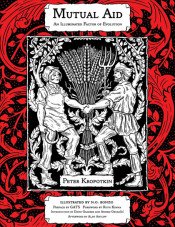
One hundred years after his death, Peter Kropotkin is still one of the most inspirational figures of the anarchist movement. It is often forgotten that Kropotkin was also a world-renowned geographer whose seminal critique of the hypothesis of competition promoted by Social Darwinism helped revolutionize modern evolutionary theory. An admirer of Darwin, he used his observations of life in Siberia as the basis for his 1902 collection of essays Mutual Aid: A Factor of Evolution. Kropotkin demonstrated that mutually beneficial cooperation and reciprocity - in both individuals and as a species - plays a far more important role in the animal kingdom and human societies than does individualized competitive struggle. Kropotkin carefully crafted his theory making the science accessible. His account of nature rejected Rousseau’s romantic depictions and ethical socialist ideas that cooperation was motivated by the notion of “universal love.” His understanding of the dynamics of social evolution shows us that the power of cooperation - whether it is bison defending themselves against a predator or workers unionizing against their boss. His message is clear: solidarity is strength!
Autor*innen: Peter Kropotkin

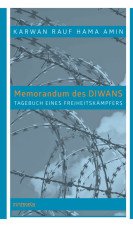
Im Schatten des Terrors und der Unterdrückung erzählt Karwan Rauf Hama Amin seine bewegende Geschichte als kurdischer Widerstandskämpfer im Nordirak der 1980er Jahre. Inmitten eines brutalen Kampfes gegen das Regime von Saddam Hussein wird er gefangen genommen. Drei Jahre lang ist er in den berüchtigten Gefängnissen inhaftiert, gezeichnet von harter Haft, Folter und einem täglichen Ringen um Würde und Hoffnung. Mit eindringlicher Ehrlichkeit schildert er sehr explizit den erbarmungslosen Überlebenskampf hinter den Gefängnismauern und die stille Solidarität, die ihn und seine Mitgefangenen trotz unerträglicher Qualen verbindet. Dieses Buch ist ein Zeugnis von Widerstand, dem Streben nach Freiheit und ein Mahnmal gegen das Vergessen.
Autor*innen: Karwan Rauf Hama Amin

Antisemitismus ist ein noch immer aktuelles und umstrittenes Problem. Die Vorstellung von der besonderen Macht der Juden, die sich bereits in der Antike findet und mit den Protokollen der Weisen von Zion nicht endet, ist für ihn zentral. Diese Verschwörungstheorie eignet sich heute dazu, die Mechanismen kapitalistischer Ausbeutung und Herrschaft zu ignorieren, und ruft einen enormen Hass hervor, der den globalen Aufstieg der Autoritären und der extremen Rechten emotional grundiert.
Autor*innen: Peter Bierl
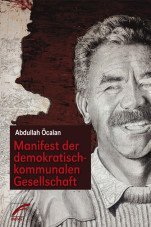
In seinem aktuellen Werk, dem ersten seit über einem Jahrzehnt, schlägt Abdullah Öcalan einen Fahrplan für eine Transformation der Gesellschaft vor, der auf Kommunalismus, Ökologie und radikaler Demokratie basiert. Das Manifest der kommunalen Demokratie bietet dabei einen tiefen Einblick in die theoretischen Grundlagen des Paradigmenwechsels der kurdischen Freiheitsbewegung – von der Strategie des bewaffneten Kampfs um nationale Befreiung hin zur radikaldemokratischen Politik um politische Selbstbestimmung. Öcalans freiheitliche Vision der kommunalen Demokratie beschränkt sich dabei keineswegs auf Kurdistan oder den Nahen Osten, sondern gibt wichtige Impulse für die weltweite Debatte über einen radikaldemokratischen Sozialismus des 21. Jahrhunderts.
Autor*innen: Abdullah Öcalan
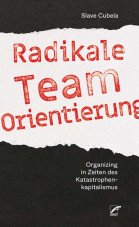
Organizing ist innerhalb der deutschen Linken in aller Munde. So erfreulich diese Entwicklung ist, so fragil ist sie allerdings. Vor allem, weil die Organizing-Rezeption hierzulande weitgehend ohne größere Debatten verläuft. Damit fehlen zum einen genauere Überlegungen, wie Organizing angepasst werden muss, damit es in deutschen Verhältnissen noch besser funktionieren kann. Zum anderen bleibt damit die Frage ausgeklammert, ob und wie Organizing dem Katastrophenkapitalismus mit seinen bedrohlichen Wirkungen etwas entgegensetzen kann.
Autor*innen: Slave Cubela

Ende der 1960er-Jahre, als die Kämpfe der radikalen Linken zu verstärkter staatlicher Repression führten, entstanden ausgehend von West-Berlin lokale Rote-Hilfe-Gruppen zur solidarischen Unterstützung der Betroffenen. Sie waren eher der undogmatischen Spontiszene zuzuordnen, aber es gab auch leninistische und maoistisch ausgerichtete Kader-Gruppen. Die Rote Hilfe Deutschland (RHD) wurde um die Jahreswende 1974/75 als Unterorganisation der maoistischen KPD/ML gegründet, mit dem Ziel, eine bundesweite Organisation zu schaffen. Zunächst als »revolutionäre Massenorganisation der Arbeiterklasse« verstanden, ging in den frühen 1980er-Jahren mit dem allgemeinen Niedergang der K-Gruppen auch der RHD fast die Luft aus. Doch Aktivist:innen einer neuen Generation kamen zu Hilfe: Sie wagten den Sprung in eine Solidaritätsorganisation, die sich selbst – bis auf den heutigen Tag – als strömungsübergreifend versteht.
Autor*innen: Markus Mohr
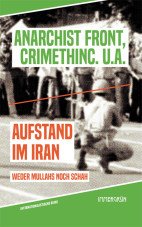
Seit fast einem Jahrzehnt erlebt die iranische Gesellschaft immer wieder Wellen von Straßenprotesten gegen das herrschende politische System, die Islamische Republik. Diese Proteste sind zwar durch unterschiedliche unmittelbare Auslöser entstanden, haben jedoch alle ihre Wurzeln in tiefgreifenden und ungelösten strukturellen Krisen – wirtschaftlicher, politischer und sozialer Art –, die das tägliche Leben im Iran weiterhin prägen.
Autor*innen: CrimethInc.
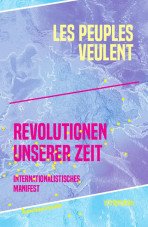
Im Getümmel der Straßenkämpfe, in den Gesten, die sich von einem Land zum anderen wiederholten, in den Worten, die in vielen Sprachen widerhallten, haben wir uns wiedererkannt. Wir haben verstanden, dass wir Teil eines transnationalen Kampfes sind. Dass wir es mit international organisierten Mächten zu tun haben. Und dass wir nichts ausrichten können, wenn wir voneinander isoliert bleiben. Aus dieser Erfahrung heraus sind all jene verbunden, die unabhängig von ihrem Alter, ihrem Geschlecht, ihrer ethnischen Zugehörigkeit, ihrer Religion oder ihrer Sprache tief in ihrem Herzen und ihrem Körper das Entstehen eines neuen revolutionären Zyklus erkannt haben.
Autor*innen: Les Peuples Veulent







 Meine Buchhandlung befindet sich in der Oelweingasse 36/5, 1150 Wien - einen Einblick bietet die Bildergalerie. Hier kannst Du in Ruhe schmökern, ich freue mich auf Deinen Besuch!
 Die Buchhandlung ist jeden Dienstag und Mittwoch von 18:00 - 20:00 Uhr sowie jeden 1. und 3. Samstag im Monat von 12:00 - 16:30 Uhr geöffnet. Alle Artikel aus dem Shop sind vor Ort erhältlich.